The House of Dancing Water Story: Plot, Characters And Creative Lineage Explained
A wordless story told on 17 million litres of water, rebuilt in 2025 by a new director and a nearly 300-strong company. Here is what actually happens on the stage, who the characters are, and where the production came from.
Short answer
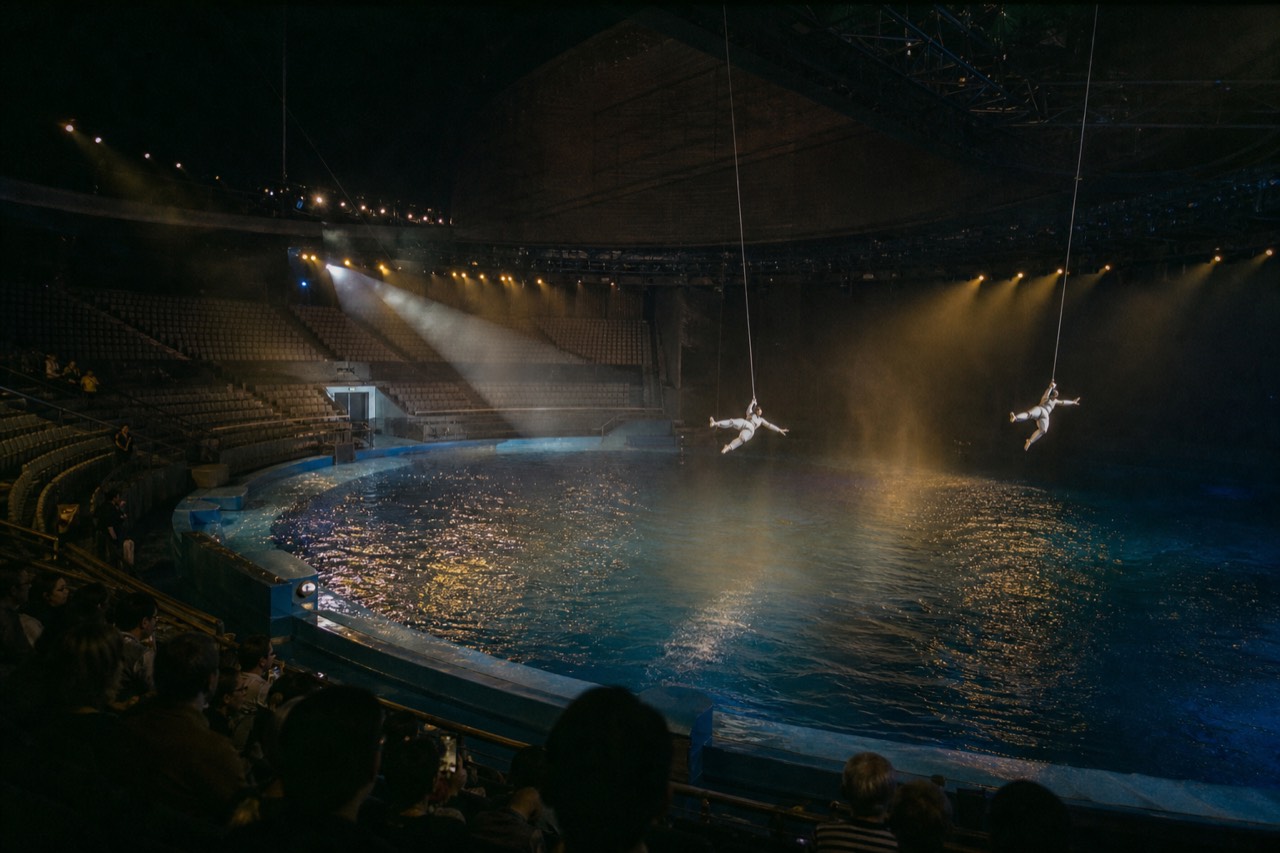
The House of Dancing Water follows a princess, a stranger and the dark queen who stands between them, told without dialogue on a 17-million-litre pool by a company of nearly 300 cast and crew from more than 30 countries. The reimagined production, directed by Giuliano Peparini, has run at City of Dreams since 9 May 2025.
On 9 May 2025, the Dancing Water Theatre at City of Dreams reopened to the public with a show most of the internet still describes incorrectly. The production on stage that night was not the 2010 original dragged out of storage. It was a rebuilt version, reimagined by a new director, with new music, new costumes, new scenes and a new character, performed over a pool holding 17 million litres of water.
That gap between what most guides say and what is actually on stage is why this page exists. The story of the House of Dancing Water is simple to follow once you know the cast and the shape of the arc, but almost nothing written about it distinguishes the current production from the retired one. This guide does, act by act, using the official programme, the venue's own published materials and the coverage that recorded the relaunch.
What Is The Story Of The House of Dancing Water?
The House of Dancing Water follows a princess, a stranger who arrives from outside her world, and the dark queen who stands between them, told entirely through movement rather than dialogue. The reimagined production has run at the Dancing Water Theatre in City of Dreams since 9 May 2025, directed by Giuliano Peparini, with a company of nearly 300 cast and crew from more than 30 countries.
The premise fits in one breath. A princess, Aani, lives in a world ruled by Lillith, the Dark Queen. A stranger, Jean, arrives from beyond that world, and the connection between him and the princess sets the queen and her minister against them. Around that central conflict circle the show's other voices: a fisherman, a sage, and the Sailor, a comic figure introduced with the 2025 reimagining. The official FAQ describes the Sailor as "a likeable and comedic character whose story intertwines with the existing characters."
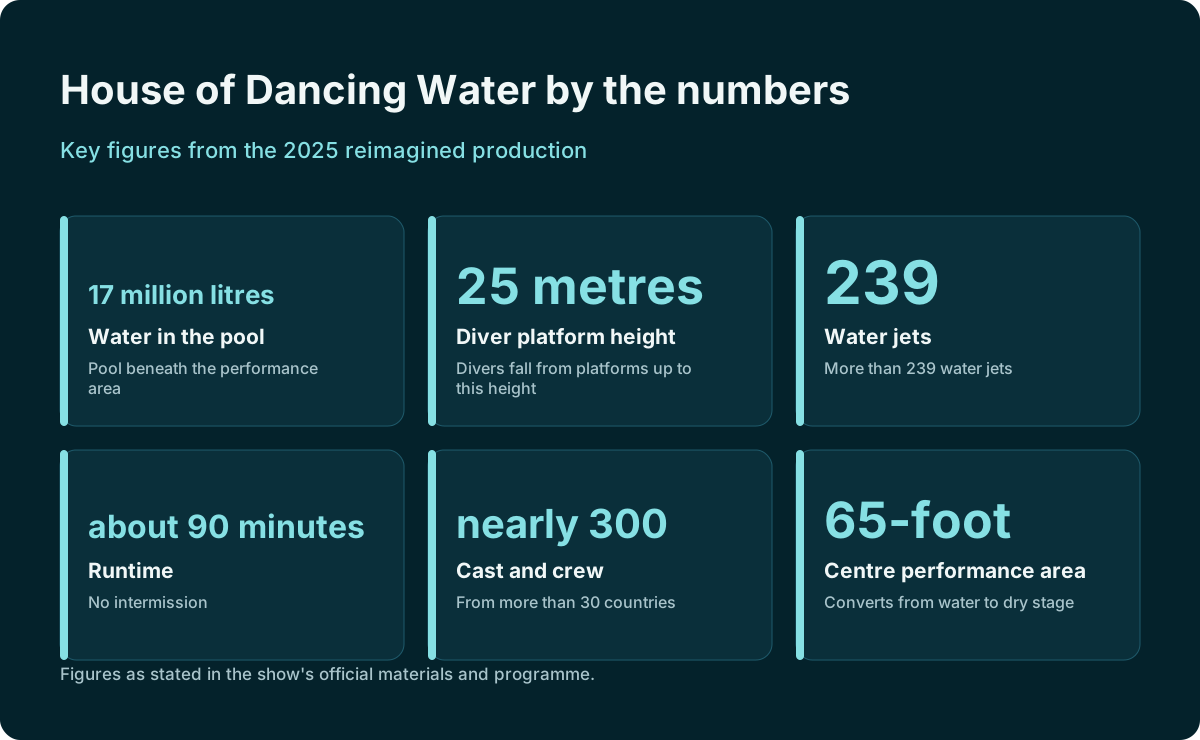
What makes the show unusual is not the plot but the telling. The official FAQ states it plainly: "No language, performers do acrobatic to perform the show and express their meaning." There is no dialogue, no narration and no surtitle screen. Divers fall from platforms up to 25 metres high, aerialists carry the romantic passages, and more than 239 water jets turn the pool itself into a character. A first-time viewer who knows the seven names above can follow every turn of the story without a programme, which is exactly how the show is designed to work.
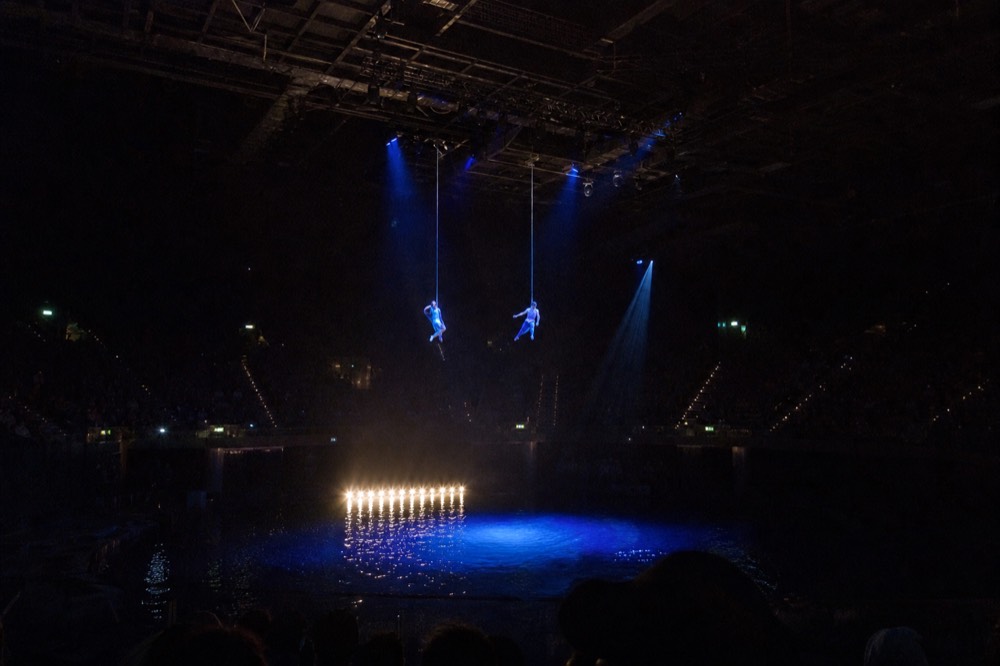
The runtime matters to the shape of the arc as well. The performance lasts about 90 minutes with no intermission, a single unbroken sweep from arrival to resolution, and the practical details around that runtime are covered in the companion guide on how long the House of Dancing Water runs. For everything around booking seats, House of Dancing Water Tickets keeps the current options and pricing in one place.
Who Are The Characters In The House of Dancing Water?
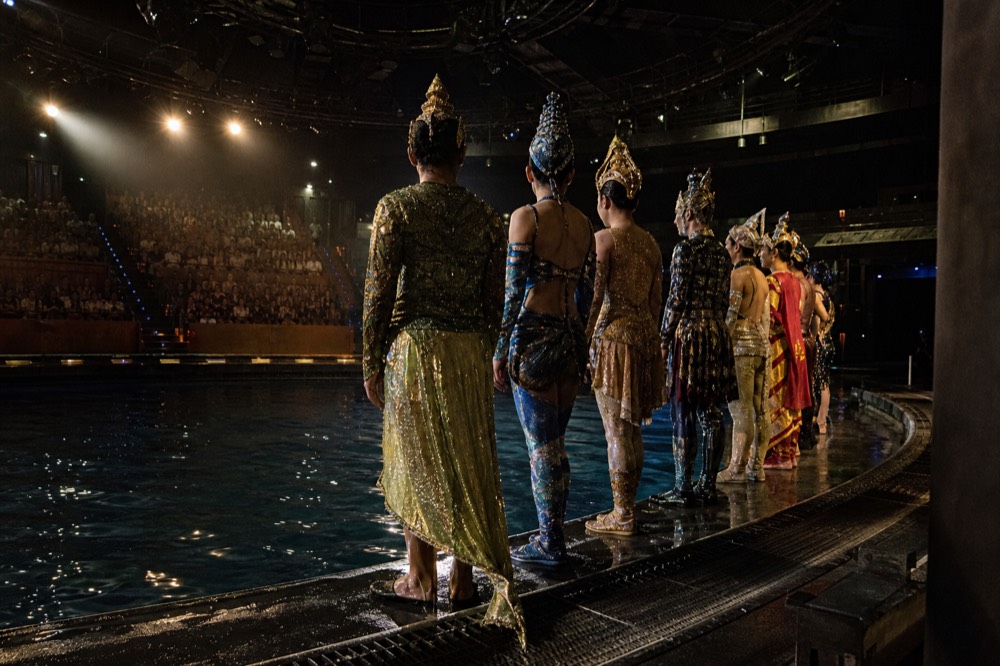
The official programme names seven lead characters: Princess Aani, Jean the Stranger, Lillith the Dark Queen, Salvador the Sailor, Iago the Minister, Zhong the Fisherman and Wabo the Sage. A performer credited as Kiki currently plays Princess Aani, though casts rotate. The Sailor, introduced with the 2025 reimagining, is described officially as a likeable, comedic figure whose story intertwines with the existing characters.
The names tell you most of what you need before the lights go down. The programme, published digitally by the resort, credits each role to a named performer, and the archetypes are instantly readable: the princess at the centre, the outsider who reaches her, the queen who opposes them, the minister who carries out the queen's bidding, and two figures, the fisherman and the sage, who anchor the world the stranger arrives into.
| Character | Performer in the current programme | Place in the story |
|---|---|---|
| Princess Aani | Yu Jingjing | The princess at the centre of the arc |
| Jean the Stranger | Luke Chadwick-Jones | The outsider whose arrival starts the story |
| Lillith the Dark Queen | Nietta Dalmini | The opposing force who stands between them |
| Salvador the Sailor | Ross Travis | Comic figure, new to the 2025 reimagining |
| Iago the Minister | Wayne Wilson | The queen's instrument |
| Zhong the Fisherman | Shan Qian Fei | An inhabitant of the world Jean arrives into |
| Wabo the Sage | Athuman Ford Athuman | The world's wisdom and guide figure |
Casts rotate, so the performers above are the programme's current credits rather than a permanent fixture, but the seven roles are the fixed scaffolding of the story. The Sailor is the one genuinely new face among them, added when the production was rebuilt, and his comedy gives the darker middle of the arc somewhere to breathe.
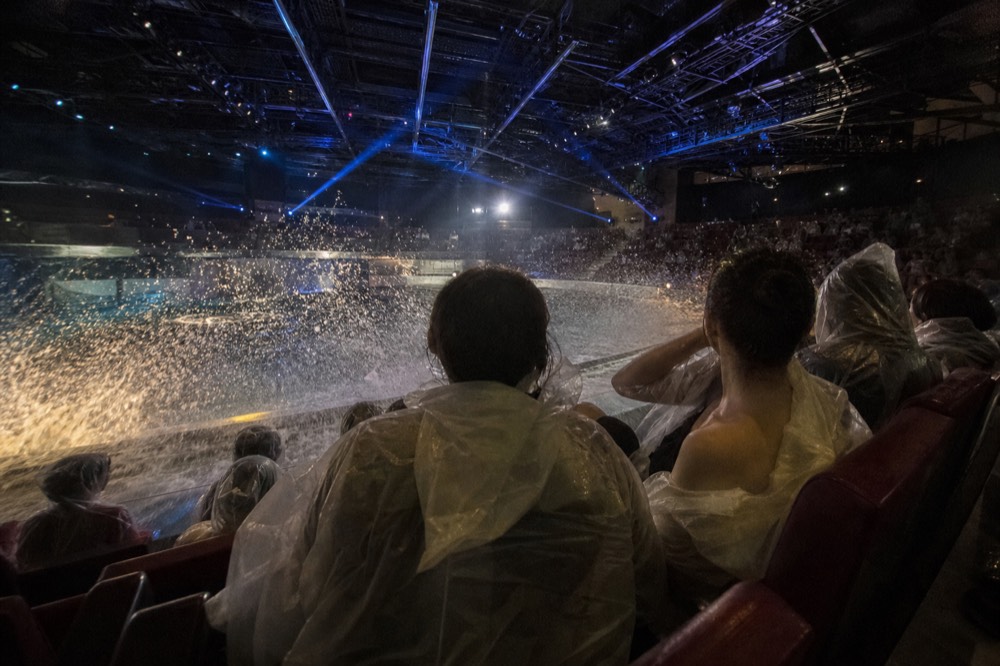
Where you sit changes how you experience those characters, more than in most theatres. The first two rows of every section form the splash zone, where waterproof gear is provided on the seats, so the choice between staying dry and leaning into the water is a real one. The full breakdown is in the seating plan guide, and the three seat zones most first-time visitors weigh are below.
How Does The Story Unfold, Act By Act?
The story plays out over roughly 90 minutes with no intermission and no spoken language, moving from the stranger's arrival through the dark queen's opposition to a resolution carried by diving, acrobatics and water effects. Because the show tells its story physically, the arc is deliberately simple: arrival, conflict, pursuit and reunion, each movement carried by a different staging discipline.
The first movement establishes the world. The pool, the fisherman and the sage introduce the audience to a place governed by the Dark Queen, and the staging here leans on the water itself, with fountain effects and surface work that set the rules of the world before anything threatens them. This is also where the theatre does something almost no other venue can do: the 65-foot centre performance area converts from water to a solid floor and back, so dry-ground scenes and full-pool scenes can alternate within the same act.
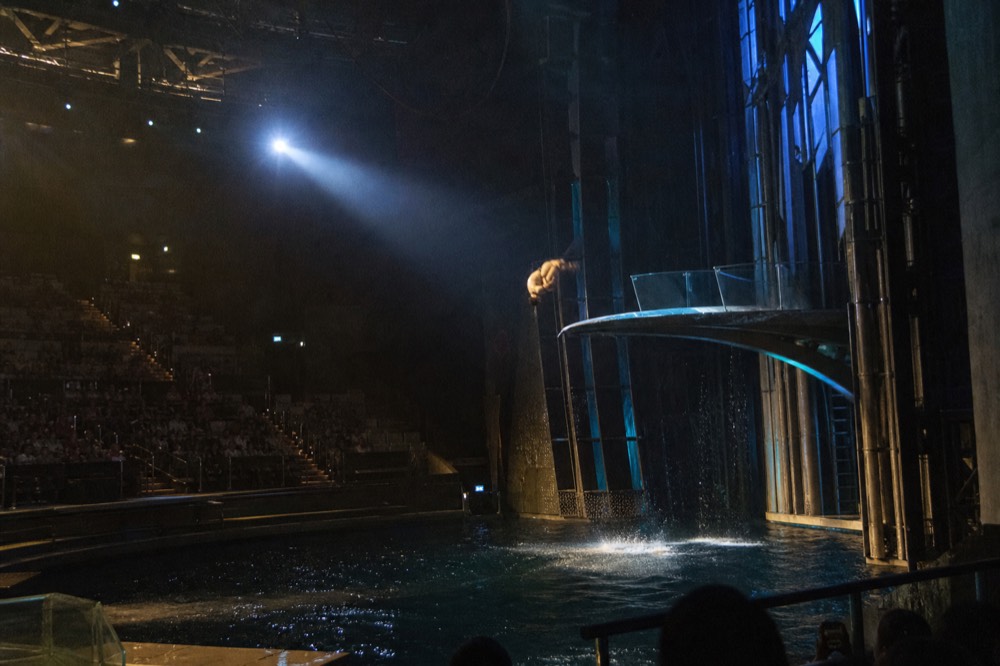
The second movement turns on Jean's arrival and the queen's response. The official effects list for the production names the vocabulary this part of the story is told in: flashing lights, fog, pyrotechnics, liquid nitrogen, hydro effects including splashes that reach the front rows, and motorbike stunts. The conflict passages belong to the divers and aerialists, with entries from heights up to 25 metres, and the chase and pursuit beats are where the Sailor's comedy threads through the tension.
The final movement resolves the arc the way water shows must, through spectacle rather than speech. Reviewers consistently describe the closing stretch as the emotional payoff of everything the staging has built, and because there is no intermission, the resolution arrives without a break in the tension. The show's own disclaimer is worth reading before you go, since the effects list is more intense than many family shows, and the splash rows are exactly what they sound like.
One honest caveat belongs here. Because the production is wordless, no two summaries of it agree in detail, and this site does not invent scene-by-scene specifics that the official materials do not publish. The character list, the arc shape and the staging vocabulary above are all sourced; anything more granular you read elsewhere, down to named scenes and quoted moments, is the writer's reconstruction rather than the venue's account. The show rewards exactly this openness, since a story told in movement is meant to be read, not recited.
Who Created The House of Dancing Water?
The original House of Dancing Water opened in 2010, directed by Franco Dragone, and ran until its closure; Dragone died in 2022 and receives no credit on the current show. The reimagined production premiered on 7 May 2025 and opened to the public on 9 May 2025, recreated and reimagined by Giuliano Peparini of Peparini Studios and produced by Our Legacy Creations.
The lineage matters because almost everything written about this show online conflates two different productions. The 2010 original was a Franco Dragone creation, and it played to millions before the pandemic closed it down. Dragone died in 2022, and the current show credits him nowhere. The production on stage today is Giuliano Peparini's, built by his studio and produced by Our Legacy Creations, and the relaunch coverage that recorded both the 7 May gala and the 9 May public opening is the New Macau report from the relaunch week.
| 2010 original | 2025 reimagining | |
|---|---|---|
| Director | Franco Dragone | Giuliano Peparini |
| Produced by | Not credited in the current materials | Our Legacy Creations |
| First performance | 2010 debut | Gala 7 May 2025, public 9 May 2025 |
| Status | Retired | Running at City of Dreams |
| Company | Size unresolved in reliable sources | Nearly 300 cast and crew from over 30 countries |
| Music | Scored by Benoit Jutras | Jutras's original themes retained, new themes by Davide Esposito |
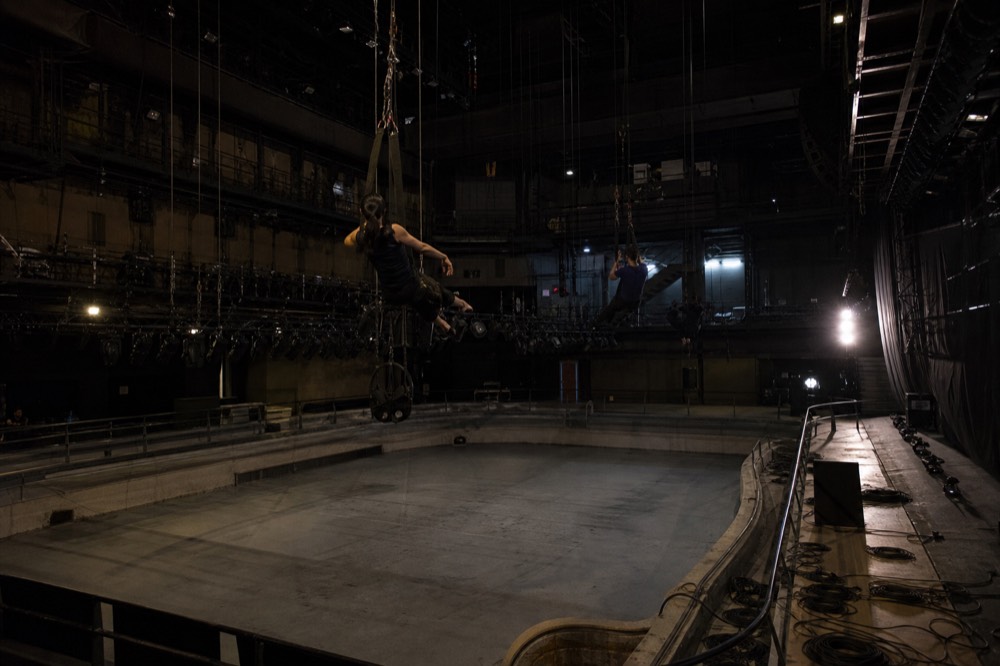
The scale of the rebuild is worth dwelling on. The current company of nearly 300 cast and crew is reported as almost double the original, and it includes Olympic athletes, aerialists, divers and engineers. The revival itself was reported at a cost of more than US$40 million, a figure that circulates through trade coverage rather than the operator's own published accounts, so treat it as a secondary estimate rather than an audited number.
What Is New In The Reimagined 2025 Production?
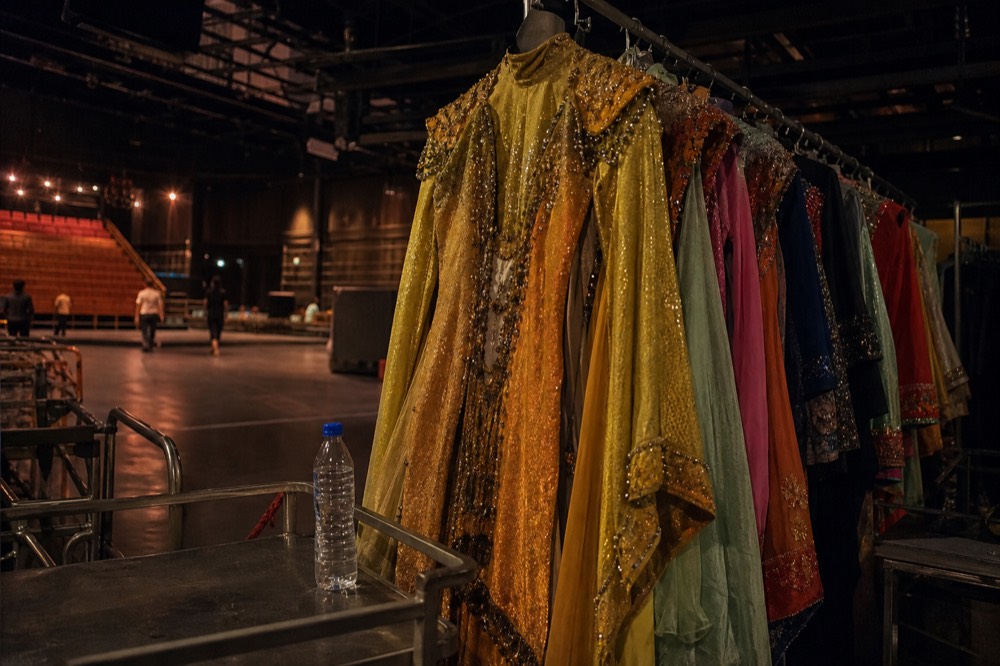
The official FAQ lists new stage design, new costumes, new show music, new scenes and new characters, plus two VVIP boxes on Level 2. The Sailor is the named new character. Music retains Benoit Jutras's original themes alongside new themes by Davide Esposito, produced, arranged and orchestrated by Evan Jolly, with costumes by Valentina Davoli and hair and makeup by Connie Dyson.
The Jutras credit is the detail most coverage misses, and it is the most meaningful one. He scored the original 2010 production, so the reimagined show deliberately carries his original themes forward while layering new material on top of them. That is a real thread of continuity between two otherwise separate productions, and it is why the music sounds related to the show long-time Macau visitors remember even though everything else was rebuilt. The full list of what changed comes straight from the official show page's own FAQ.
| Creative role | Credit on the current production |
|---|---|
| Direction and reimagining | Giuliano Peparini, Peparini Studios |
| Producer | Our Legacy Creations |
| Music production, arrangement, orchestration | Evan Jolly |
| Original themes | Benoit Jutras |
| New themes | Davide Esposito |
| Costume design | Valentina Davoli |
| Hair and makeup | Connie Dyson |
The company itself is another quiet change with real substance. Of the nearly 300 cast and crew, roughly one third are drawn from Greater China, a split the operator frames as local talent development rather than an imported circus. A named performer credited as Kiki plays Princess Aani in the current company, and Michelle Renee Derstine is credited as an aerialist, though casts rotate and neither name should be treated as permanent.
How Does The Theatre Itself Tell The Story?
The Dancing Water Theatre holds a 17-million-litre pool, about 3.7 million gallons, and converts its 65-foot centre performance area from water to solid floor using eight 10-ton hydraulic elevators in about a minute. Over 239 water jets reach 18 metres, divers enter from heights up to 25 metres, and 16 underwater cameras plus more than 200 safety devices monitor the stage.
The venue is not a backdrop for the story, it is the storytelling medium. The pool's volume is described by the resort as equivalent to more than five Olympic-sized swimming pools, and the stage machinery can turn the central performance area from open water to a solid performing floor and back, which is how a single unbroken show moves between dry-ground scenes and full-pool spectacles. The conversion runs on 32 hydraulic cylinders driving the eight main lifts, and the theatre consultant that designed the venue documents the engineering in its case study of the building.
| Stage system | Published figure |
|---|---|
| Pool volume | 17 million litres, about 3.7 million gallons |
| Centre performance area | 65 feet in diameter |
| Floor conversion | Eight 10-ton hydraulic elevators, about a minute via 32 cylinders |
| Water jets | Over 239, reaching 18 metres |
| Maximum dive height | Up to 25 metres |
| Underwater cameras | 16, monitoring performers in real time |
| Safety devices | Over 200 |
| Seating | Nearly 2,000 seats, including 20 wheelchair positions, plus 23 VVIP box seats |
The audience wraps around 270 degrees of that stage in a theatre-in-the-round configuration, which is why no two seats frame the story the same way. The two VVIP boxes on Level 2 hold 10 and 13 guests and add themed drinks, dining and a post-show meet and greet with the artists. For everyone else, the practical takeaway is simpler: the closer you sit, the more of the water you become part of, and rows A and B of every section are the splash zone by design.
Is The Story Easy To Follow Without Dialogue?
Yes. The official FAQ is blunt about this: there is no language, and the performers express the story through acrobatics. The show runs about 90 minutes without an intermission, is not recommended for children aged six or below, and requires an accompanying adult for children aged 12 or under. Personal photography is allowed, but flash and video recording are prohibited.
A wordless show sounds like hard work until you see one. The story's scaffolding, seven clearly drawn archetypes and a three-movement arc, is built to be legible from the back row of the gallery as much as from the Golden Circle. The venue's own guidance confirms the point from the other direction: because nothing depends on language, the show plays identically to a full house of Cantonese, Mandarin, English and Portuguese speakers, which is precisely why it works as Macau's flagship resident production.
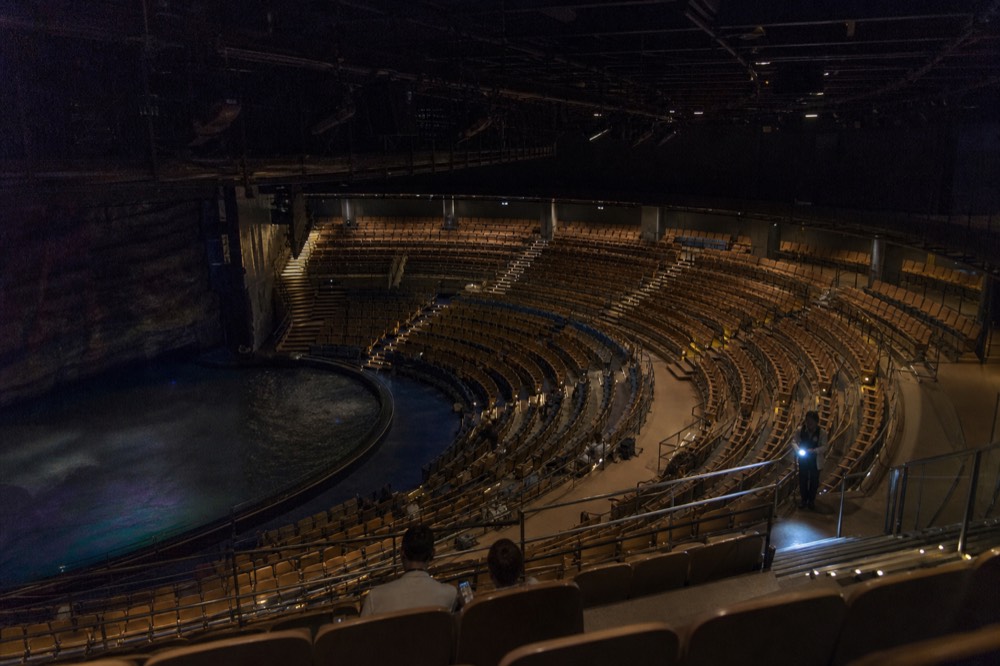
The practical rules around watching are published and worth knowing before you arrive. The venue asks audiences to be seated at least 15 minutes before the start, latecomers are admitted only at suitable breaks in the performance, and outside food and drink are not permitted. The current listed showtimes are 16:30 and 19:30, dark normally on Mondays and Tuesdays, though times are seasonal and the show times guide tracks the pattern in detail.
| Practical detail | Official position |
|---|---|
| Duration | About 90 minutes, no intermission |
| Showtimes | 16:30 and 19:30 listed for the June to October 2026 period, seasonal |
| Dark days | Normally Monday and Tuesday, adjusted around public holidays |
| Age guidance | Not recommended for 6 and under; 12 and under must be accompanied by an adult |
| Arrival | At least 15 minutes before the show starts |
| Splash zone | Rows A and B of every section, waterproof gear provided on the seats |
| Photography | Personal photos allowed, flash and video recording prohibited |
Tickets for the current production start from about $54.95 per person on the live listing, which carries the 4.8 rating across about 20,165 reviews, and the venue's own early-bird offer brings the Gallery entry price down to MOP 558 when booked 14 days ahead. The practical route is to compare the seat zones on the House of Dancing Water ticket page and Check availability once you have settled on a zone.
How Has The Story Been Received Since The Relaunch?
The production's team received the Medal of Merit, Tourism, from the Macao SAR Government, presented on 30 January 2026. Melco's own Q2 2026 filing credits the set for higher non-gaming revenues at City of Dreams, and the show was reported as on track to pass its one millionth audience member during summer 2026. The live listing shows 4.8 across about 20,165 reviews.
The institutional recognition is the clearest signal. The Medal of Merit, Tourism, was announced in late December 2025 and presented at the government's decorations ceremony, with the operator's chairman framing the show as evidence that non-gaming investment supports Macau's economic diversification. The award coverage from Inside Asian Gaming records the citation and the ceremony date.
The commercial evidence sits in the operator's own filings. Melco's Q2 2026 results state that higher non-gaming revenues at City of Dreams were primarily driven by the relaunch of the House of Dancing Water in May 2025, which is the strongest grounding available that the show is materially important to the resort, not just a marketing flourish. Attendance-wise, the honest phrasing is "approaching one million": sources reported the production as on track to pass its millionth audience member during summer 2026, and no cumulative total has been published since.
Can You Go Behind The Scenes After The Show?
Yes. A public backstage tour launched on 15 July 2026, running after the evening performance from roughly 21:15 for about 45 minutes, priced from MOP 888 per person with a minimum age of 12. It takes guests past stage props including the Golden Boat and the Dream Pagoda, to the 17-million-litre pool, and onto an 18-metre-high platform above the stage.
For anyone whose interest in the story runs deeper than the auditorium, the backstage tour is the freshest product at the venue and the one thing no older guide will mention. It runs after the evening performance, so the natural pattern is an evening ticket followed by the tour, and it reaches the parts of the production the audience never sees: the underground diving area, the props that carry the narrative, and a platform 18 metres above the stage that puts the dive heights into perspective better than any number can.
The tour's age minimum of 12 is firmer than the show's own guidance, which matters for families weighing it. Combined with a ticket, it turns a 90-minute story into a full evening at the resort, and the surrounding City of Dreams complex, from Morpheus to the newly opened REM tower, gives the night a before and after that needs no scheduling gymnastics.
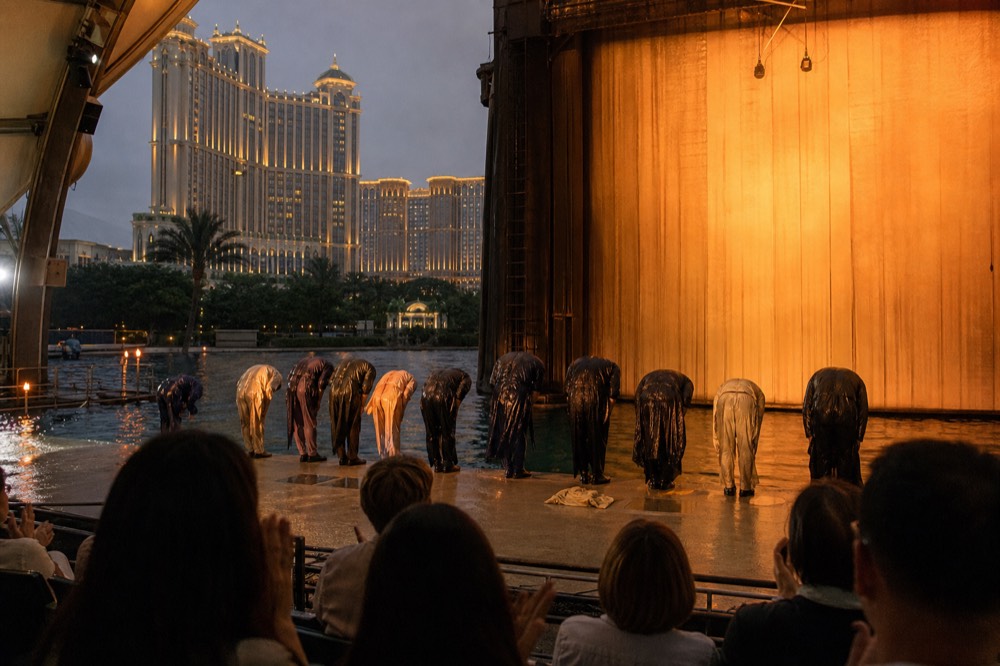
The story of the House of Dancing Water, in the end, is two stories. On stage, a princess, a stranger and a dark queen, told in water and movement over 90 unbroken minutes. Off stage, a 2010 spectacle retired, its creator gone, and a nearly 300-strong company rebuilding the whole thing for a second life that began on 9 May 2025 and is still running five nights a week. Knowing both makes the evening considerably better.
The questions below are the ones visitors ask most often about the plot, the characters and the creative lineage: what the story is, who the seven leads are, whether the current show differs from the 2010 original, how a wordless production carries a narrative, how long it runs, and what exists for anyone who wants more than the auditorium. Each answer is drawn from the official programme and the venue's published materials.
Common Questions About The House of Dancing Water Story
What Is The Story Of The House of Dancing Water?
A princess, a stranger who arrives from outside her world, and the dark queen who stands between them, told entirely without dialogue through diving, acrobatics and water staging. The arc runs arrival, conflict, pursuit and resolution over about 90 minutes with no intermission, carried by seven lead characters named in the official programme.
Who Are The Main Characters In The House of Dancing Water?
Princess Aani, Jean the Stranger, Lillith the Dark Queen, Salvador the Sailor, Iago the Minister, Zhong the Fisherman and Wabo the Sage. The Sailor is the new character introduced with the 2025 reimagining, described officially as a likeable and comedic figure whose story intertwines with the existing characters.
Is The House of Dancing Water The Same Show As The 2010 Original?
No. The original opened in 2010 under director Franco Dragone and has been retired. The current production premiered on 7 May 2025 and opened to the public on 9 May 2025, reimagined by Giuliano Peparini and produced by Our Legacy Creations, with new stage design, costumes, music, scenes and characters. Dragone, who died in 2022, receives no credit on the current show.
Does The House of Dancing Water Have Dialogue?
No. The official FAQ states there is no language and that performers express the story through acrobatics. This is why the show plays identically to audiences of any language, and why knowing the seven character names before you arrive is the only preparation the story needs.
How Long Is The House of Dancing Water Story?
About 90 minutes with no intermission, performed twice a day on operating days, normally dark on Mondays and Tuesdays. Showtimes listed for the June to October 2026 period are 16:30 and 19:30, though times are seasonal and the operator's calendar is the source to check.
Can You Tour The House of Dancing Water Stage After The Show?
Yes. A backstage tour launched on 15 July 2026, starting at roughly 21:15 after the evening performance and lasting about 45 minutes, from MOP 888 per person with a minimum age of 12. It includes the Golden Boat and Dream Pagoda props, the 17-million-litre pool and an 18-metre-high platform above the stage.