House of Dancing Water Dress Code: What To Wear And Where You Get Wet
The venue's written dress code is one sentence. The planning problem is everything around it: a pool holding 17 million litres at the centre of the auditorium, front rows that take water, air conditioning that runs cold, and a 90-minute show with no intermission.
Short answer
The venue's only written rule is that ticket holders must dress appropriately and wear shoes. In practice, plan for aggressive air conditioning, a 90-minute show with no intermission, and rows A and B of every section, where splashes land and waterproof gear is left on the seats. Everything else is comfort, not compliance.
The dress code for the House of Dancing Water is one sentence long, and the venue publishes it plainly in its official FAQ: ticket holders must dress appropriately and must wear shoes. That is the entire rule. There is no jacket policy, no collar requirement, no ban on shorts.
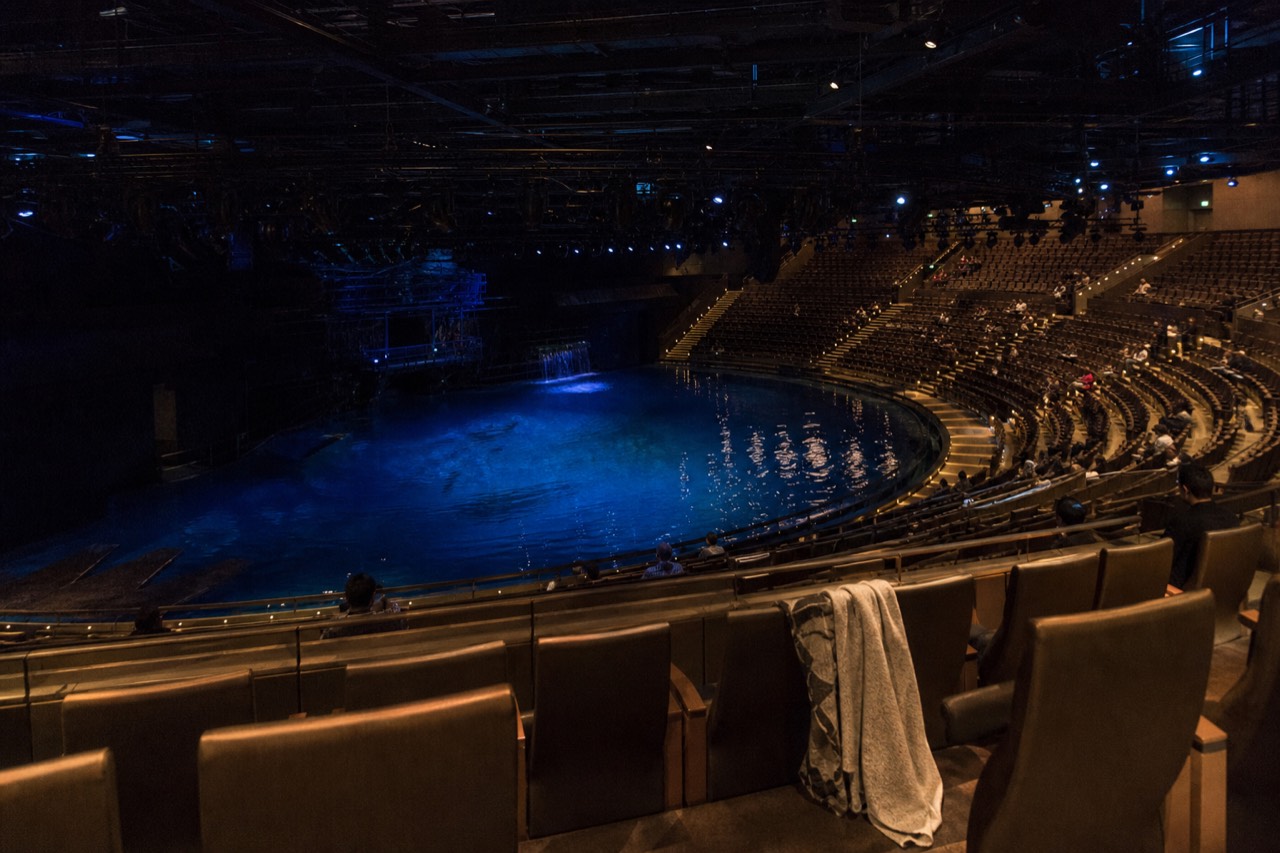
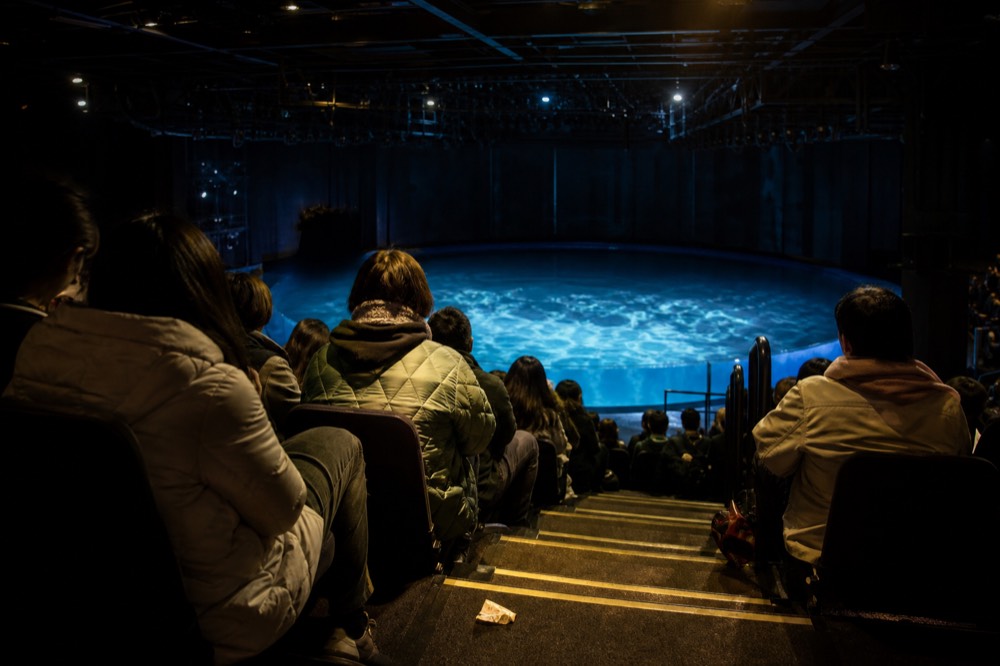
Everything else worth knowing about what to wear comes from the theatre rather than the rulebook. A pool holding 17 million litres of water, more than five Olympic swimming pools' worth, sits at the centre of a 270-degree theatre-in-the-round of nearly 2,000 seats. Eight hydraulic elevators convert the stage floor between water and solid ground. The performance includes motorbike stunts, pyrotechnics, fog and hydro effects, and the official disclaimer warns of splashes that reach the front rows. The air conditioning, meanwhile, is doing its own separate performance.
So the honest answer to "what do I wear" has three parts: comply with a one-line rule, dress for a cold 90-minute sit, and take the splash rows seriously if you are in them. This guide works through all three, plus the questions the ticket listing never answers: what happens to your bag, your camera, your toddler and your timing. It is part of the practical coverage on House of Dancing Water Tickets that treats the show as a real venue with real constraints, not a brochure.
What Is The Dress Code For The House of Dancing Water?
The venue's entire written dress code is one sentence: ticket holders must dress appropriately and must wear shoes. There is no jacket requirement, no collar rule and no ban on shorts or trainers. Compliance is easy. The planning problem is different: a 90-minute show with no intermission, aggressive air conditioning, and splash rows in the first two rows of every section, which is where what you wear actually matters.
The wording comes from the official FAQ on the show's City of Dreams show page, and it is deliberately loose. "Appropriately" is doing the work of a whole policy in one word, and the venue does not publish a definition beyond it. In practice, the audience at an evening performance in Macau ranges from resort-casual, dresses and collared shirts, to tourists straight off the ferry in shorts and sandals. Nobody is turned away for being underdressed in the fashion sense.
The shoe clause is the only hard edge. "Must wear shoes" rules out bare feet, and it is the one item a door check could actually act on. It also quietly signals the venue's real concern: this is a working aquatic theatre with wet surfaces, moving platforms and effects, not a dinner theatre where anything goes.
One more framing point. The show has no language: the official FAQ states that performers express the story through acrobatics rather than speech. That makes it unusually welcoming for a mixed crowd, families, tour groups, date nights, and it is part of why the audience dresses so broadly. You will not feel out of place in either direction. The dress code question that actually matters is not style. It is water.
Which Seats Get Wet At The House of Dancing Water?
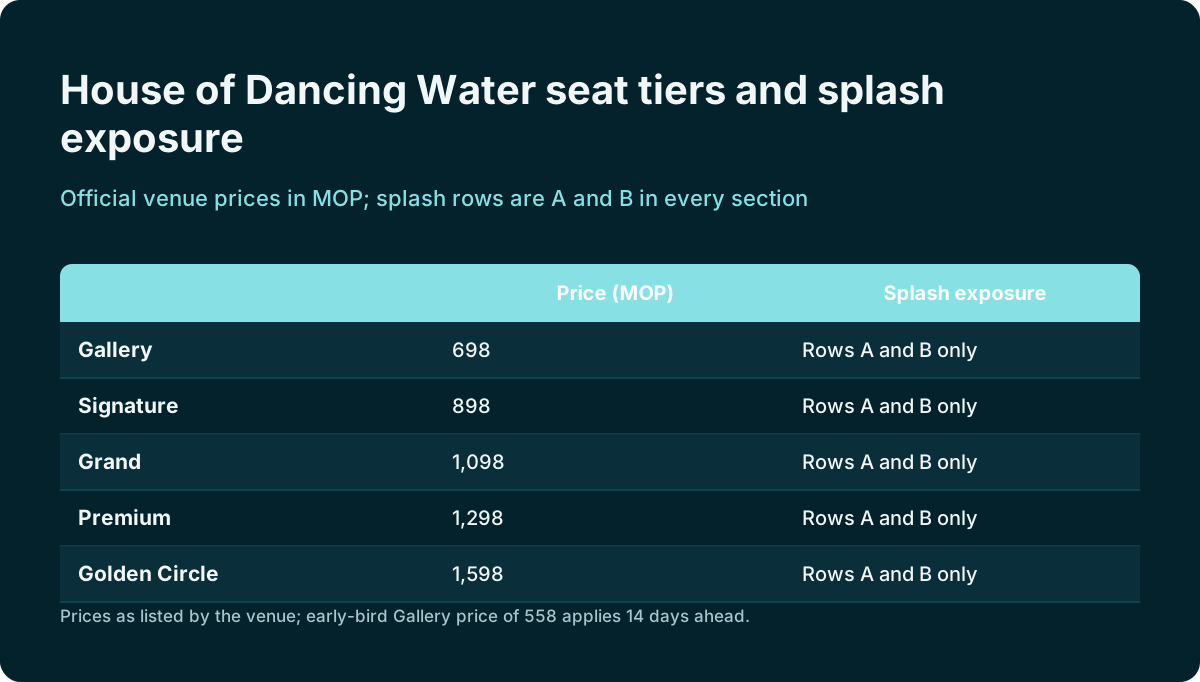
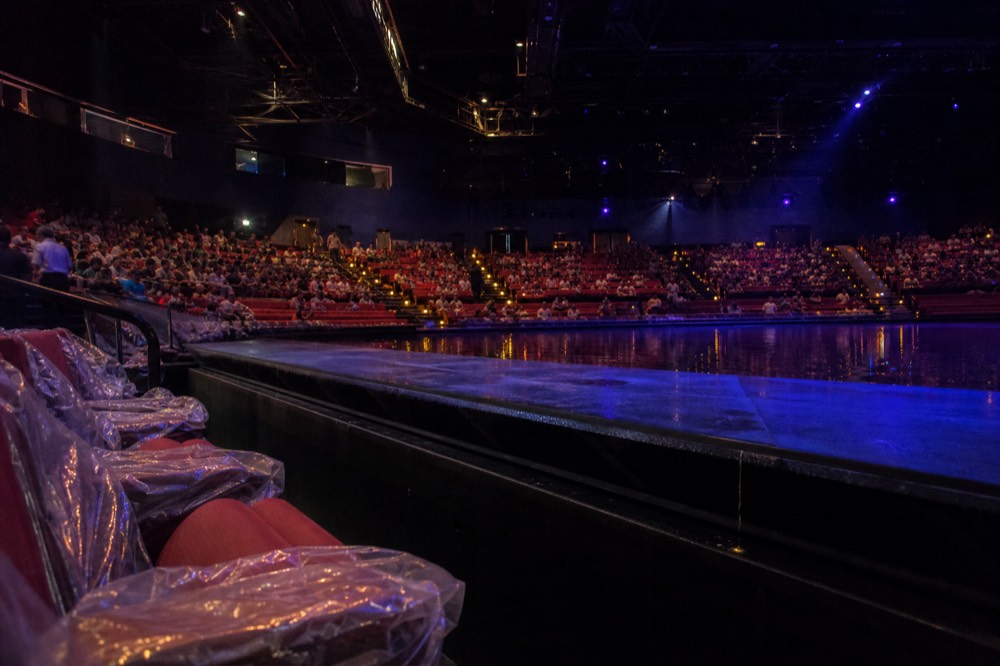
Rows A and B of every section are the splash rows at the House of Dancing Water. The venue leaves waterproof gear on the seats in those rows, and towels as well in sections 300, 400 and 500. It is not one designated wet block at the front of the theatre: any section's first two rows can take water, because the hydro effects reach the front rows from the pool at the centre.
This is the single most misunderstood thing about attending this show, and it is worth quoting the venue directly. The official FAQ states: "Water-proof gear will be provided on the seats at the first 2 rows in all sections. Towels will also be provided additionally on the seats at the first 2 rows in 300, 400 and 500 sections." Two things follow from that. First, the splash zone is structural, rows A and B of every section, not a single wet corner. Second, the venue has planned for it: the poncho-equivalent is already on your seat, so you do not need to bring your own.
The ticketing system adds a twist. Seats are not free choice; the official FAQ says the system automatically assigns the best available seats in your preferred section at the time of transaction. That is why the ticket options themselves split into splash and non-splash versions: a "splash" option books you into rows A and B of that zone, while the standard option seats you further back within the same zone. If you are dressing around water, the ticket you buy is the decision that matters most, more than anything you put on.
| Seat zone | Official venue price (MOP) | Splash exposure | What the venue says |
|---|---|---|---|
| Gallery | 698 | Rows A and B only | Entry tier; early-bird price of 558 when booked 14 days ahead |
| Signature | 898 | Rows A and B only | Second tier, same splash-row structure |
| Grand | 1,098 | Rows A and B only | Third tier, same splash-row structure |
| Premium | 1,298 | Rows A and B only | Centre of the theatre, double seats available |
| Golden Circle | 1,598 | Rows A and B only | Themed drink plus free flow of selected food and beverages |
The full row-by-row layout, including where the wheelchair positions and the VVIP boxes sit, is in our seating plan guide. For dress purposes, note the asymmetry in the towel rule: waterproof gear sits on rows A and B everywhere, but towels only in sections 300, 400 and 500. If you are in a splash seat outside those sections and you care about your hair or your jacket, the gear on the seat is what you get.
One honest caveat on the water itself. The venue's disclaimer lists hydro effects "including splashes to the front rows", but it does not publish how wet any given performance gets, and no two shows are identical. Treat rows A and B as genuinely wet, plan for the possibility of a soaking rather than a light mist, and you will never be disappointed in either direction.
What Should You Wear To Stay Comfortable During The Show?
Wear layers. The show runs about 90 minutes with no intermission, the auditorium air conditioning runs cold, and there is no mid-show chance to fetch a jumper from a cloakroom. Closed shoes satisfy the only written rule. Beyond that, dress for comfort over style: you will sit for an hour and a half in a 270-degree theatre, and if you are in rows A or B, dress so a soaking is an inconvenience rather than a disaster.
The air conditioning is the part that surprises people. Macau outside is subtropical, frequently hot and humid, so visitors arrive dressed for the street. The auditorium is a different climate, and a 90-minute sit in damp clothes under cold air is how people get chilled. A light layer you can tie around your waist outside solves it. For the full timing picture, including what the no-intermission rule means for planning your evening, see how long the show runs.
For the splash rows, fabric choice does more work than any accessory. Quick-drying materials, dark colours and nothing that shrinks, stains or matters to you. Denim is the obvious thing to avoid in rows A and B: it holds water, and it stays cold. Leather and suede, bags included, are the same story. The waterproof gear on the seat protects your body, but it does not protect whatever is on your lap.
| Item | Rows A and B (splash) | Row C and back | Why |
|---|---|---|---|
| Light jumper or layer | Yes | Yes | Auditorium air conditioning runs cold for a 90-minute sit |
| Quick-dry fabrics | Strongly advised | Optional | Hydro effects reach the front rows |
| Denim, leather, suede | Avoid | Fine | Holds water and stays cold |
| Closed shoes | Advised | Advised | The written rule requires shoes; closed pairs are the practical read |
| Phone and documents | Zip pocket or bag | Water reaches laps in the front rows | |
| Spare shirt | Optional | Not needed | Only if a soaking would genuinely ruin your evening |
The advice-table ranges above are planning judgement, not venue policy; the only published rules are the one-line dress code and the seat-provided gear. If you want to lock in the dry seats at the entry price, or embrace the wet ones deliberately, the three options below span that choice.
Can You Bring Bags, Cameras And Outside Food Into The Theatre?
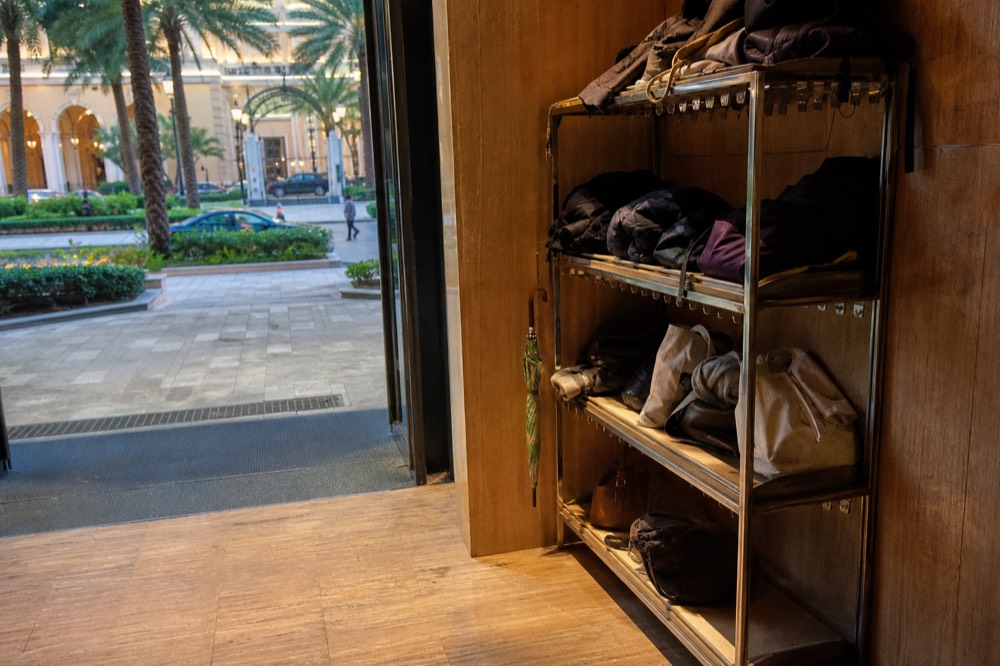
Yes to small bags, which can go in the cloakroom near the Theatre Foyer alongside strollers and luggage. Personal photography is allowed, but flash and video recording are prohibited. Outside food and drink are forbidden; concessions next to the box office sell popcorn, hot dogs, signature snacks, alcoholic beverages and soft drinks. None of this is a dress rule as such, but all of it shapes what you carry into the auditorium on the night.
The cloakroom is the quiet hero of a stress-free visit. The official FAQ confirms there is a cloakroom near the Theatre Foyer where baby strollers and luggage can be stored, which means you do not need to plan your outfit around everything you carried for the day. Shoppers and day-trippers can leave the haul at the door. Large luggage is explicitly contemplated by the venue, so a same-day ferry departure with bags in tow is workable.
Photography has one clean rule worth stating: flash and video recording are prohibited, because they affect the performers. Still photography without flash is allowed. The simplest outfit-adjacent advice is to keep the phone in a zipped pocket or the cloakroom-bound bag if you are in the splash rows, because the water that reaches the front rows does not check what is on your lap first.
| Item | Policy at the theatre |
|---|---|
| Bags and luggage | Cloakroom near the Theatre Foyer stores strollers and luggage |
| Photography | Personal photos allowed; flash and video recording prohibited |
| Outside food and drink | Forbidden; concessions sell popcorn, hot dogs, snacks and drinks |
| Strollers | Stored in the cloakroom, not taken to seats |
| Wheelchair users | 20 wheelchair seats in the last row; accessible washroom at the foyer; requests via the show enquiry line |
The food rule matters for timing more than clothing. With no intermission, there is no snack run mid-show, so whatever you buy at the concessions next to the box office is what you have for 90 minutes. Eating in a good outfit in a cold, dark, occasionally wet theatre is its own argument for the casual end of your wardrobe.
What Should Children Wear, And What Are The Age Rules?
Children aged 12 and under must be accompanied by an adult, and the show is not recommended for ages 6 and under. A child aged 2 or under can share an adult's seat for free, one per adult, with the child's ID shown on request. Every other audience member needs a valid ticket. For clothing, the same logic as adults applies, with more weight on the splash rows: a soaked child in a cold auditorium is a long 90 minutes.
The age rules are published and precise. The official FAQ recommends against bringing children aged 6 or below, requires an accompanying adult for those aged 12 and under, and allows one child aged 2 or under to share an adult's seat free of charge, with ID ready on request. The ticketing terms add that each adult can accompany only one child free of ticket. Everyone else, regardless of age, holds a valid ticket and sits in their designated section and seat.
The clothing logic for kids is the adult logic, amplified. Children run warmer outside and colder sitting still, so the layer rule matters more. In rows A and B, the waterproof gear on the seats is sized for the seat, not the person, so a small child may need the hood pulled up and sleeves managed by the adult beside them. And the effects list is worth reading before you go: the performance includes flashing lights, loud audio, fog, pyrotechnics, liquid nitrogen and motorbike stunts. A child who startles at noise or strobe will not enjoy rows A and B regardless of what they are wearing.
| Age | Ticket rule | What to plan for clothing-wise |
|---|---|---|
| 2 and under | Shares an adult's seat free, one per adult, ID on request | Warm layer on the adult's lap; no seat of their own |
| 3 to 6 | Full ticket required; show not recommended for this age | If brought anyway, dry rows and familiar comfort clothing |
| 7 to 12 | Full ticket, must be accompanied by an adult | Layers plus a responsible adult holding the splash-row decisions |
| 13 and up | Full ticket, standard adult rules | Same advice as the adult sections of this guide |
One practical note that belongs here rather than anywhere else: strollers go to the cloakroom, so a baby carrier or sling is the hands-free option if you are visiting with a very young child who shares your seat. That is a packing decision, not a rule, but it is the kind of detail the ticket listing never mentions.
What Happens If You Arrive Late Or Need To Leave Your Seat?
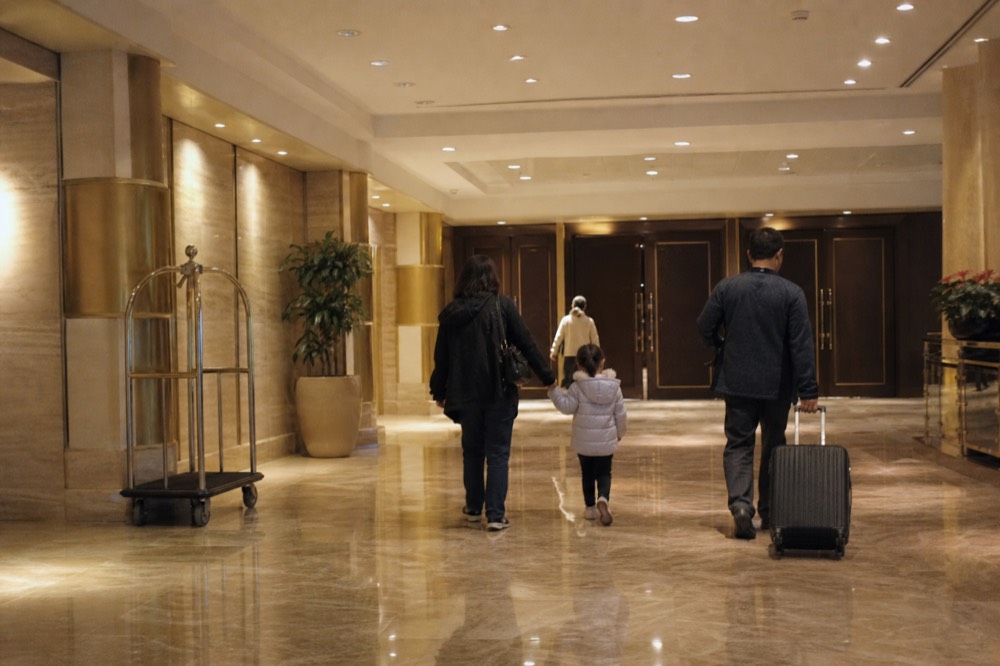
Arrive at least 15 minutes before the show starts, or at least one hour ahead if you need to collect a physical ticket. Latecomers are admitted, but only at appropriate times as instructed by onsite staff, and the 90-minute performance has no intermission to catch up in. Re-entry is allowed at appropriate times too. In practice, the margin between comfortable and flustered is the walk from the resort entrance, so build in more than the minimum.
The venue's published guidance is two numbers: 15 minutes minimum arrival before showtime, and one hour if you are collecting a physical ticket. The latecomer rule is the one people misread. You will not be refused entry, but the official FAQ and the ticket terms both say admission happens only at appropriate times, meaning suitable breaks in the performance, as directed by staff. In a show built on continuous aquatic spectacle, those breaks are not frequent and are not yours to choose. If you arrive twenty minutes late, you may stand at the back for a while in whatever you wore for the sprint.
The no-intermission rule is the reason this section belongs in a dress guide. There is no interval, so there is no natural moment to shed a layer, retrieve something from the cloakroom, or take a soaked child out to dry off and come back. Re-entry is permitted at appropriate times as directed by staff, but the practical read is that whatever state you are in at curtain-up is your state for 90 minutes. Dress for it.
| When | What happens | What it means for you |
|---|---|---|
| One hour before | Latest sensible window for physical ticket collection | Build the resort walk into this buffer |
| 15 minutes before | The venue's minimum arrival guidance | The floor, not the goal |
| Showtime | 16:30 and 19:30 listed for the June to October 2026 period | Seasonal; confirm before you plan the evening |
| During the show | 90 minutes, no intermission | No layer changes, no cloakroom runs |
| After the evening show | Backstage tour departs around 21:15, about 45 minutes | Only with the tour package, minimum age 12 |
For the current performance pattern, dark Mondays and Tuesdays, two shows on operating days, and how the calendar shifts across the year, the show times guide keeps the detail. If you are buying rather than planning, the show ticket page carries the listing, rated 4.8 across about 20,165 reviews with more than 400,000 booked over the listing's life, from about $54.95 per person.
What Should You Wear For The Trip To And From City of Dreams?
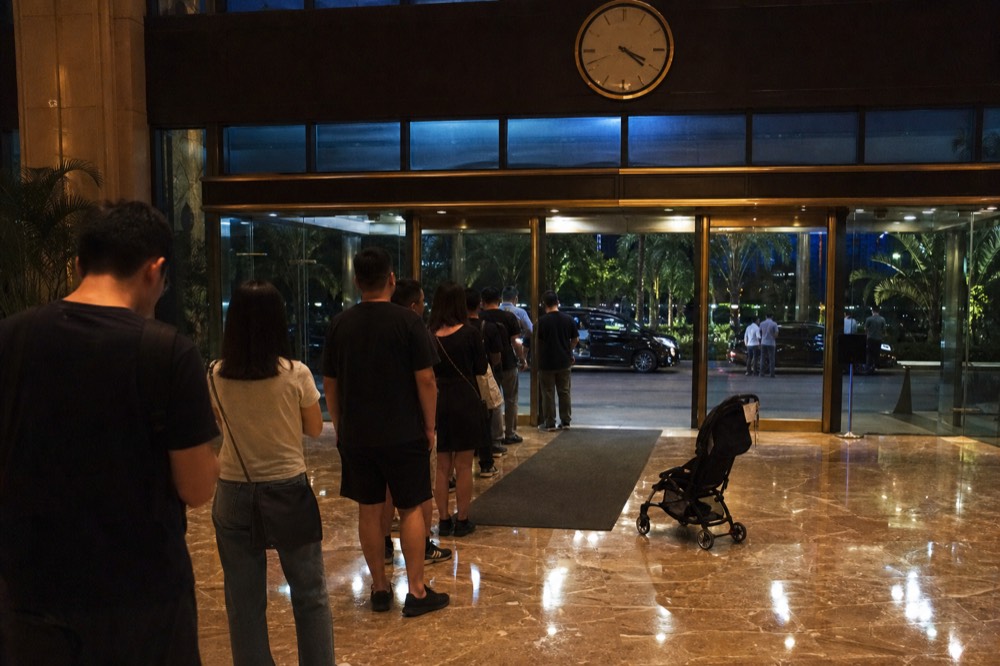
Cotai is a resort corridor, and everything from the ferry terminal to the theatre lobby is air conditioned, so the outfit that works inside the theatre works for the journey. The two real exposure points are outside: Macau's summer heat between your transport and the doors, and the late evening after the show, when guest reviews describe the scramble for ferries and taxis thinning out. Bring nothing you cannot carry comfortably through a resort floor.
Getting there is covered by the venue's own infrastructure. City of Dreams runs free shuttles serving the ferry terminals, the airport, the HZMB port and the border, with schedules published on the official getting here page. If you are driving, the resort offers three hours of free parking per day for all visitors, and a same-day show ticket adds another three free hours, redeemed at the Dancing Water Boutique, with extra hours at MOP 25 for a car and MOP 15 for a motorcycle. None of this changes your outfit, but it changes your bag count, and the cloakroom takes the rest.
The one weather factor worth respecting is typhoon season, June to October. At Tropical Cyclone Signal 8 and above, ferries, the bridge shuttle buses and other transport services are suspended, per the government's tropical cyclone signal definitions. The show itself announces on its official website whether a performance proceeds when Signal 8 approaches. If a storm is in the forecast, the rain jacket you brought for the walk becomes the least of your planning problems, but it is still the right thing to have packed.
Two smaller journey notes that touch pockets rather than clothing. Hong Kong dollars circulate widely in Macau, commonly at or near par, and change usually comes back in patacas, so small notes for the concessions are easy either way. And the after-show exit is the genuine pinch point: a guest review from the show's first season describes struggling to reach the Taipa ferry terminal once the evening performance let out. Comfortable shoes for the exit walk are not a style choice, they are the last practical decision of the night.
Does The Backstage Tour Need Different Clothing?
Yes, slightly. The backstage tour runs after the evening performance, starting around 21:15 and lasting about 45 minutes, and it goes behind the scenes of a working aquatic theatre, including an 18-metre-high platform above the stage. It is priced from MOP 888 per person and carries a minimum age of 12. Flat, closed shoes are the obvious choice for it, and the same splash-row logic applies if your show seat is in rows A or B.
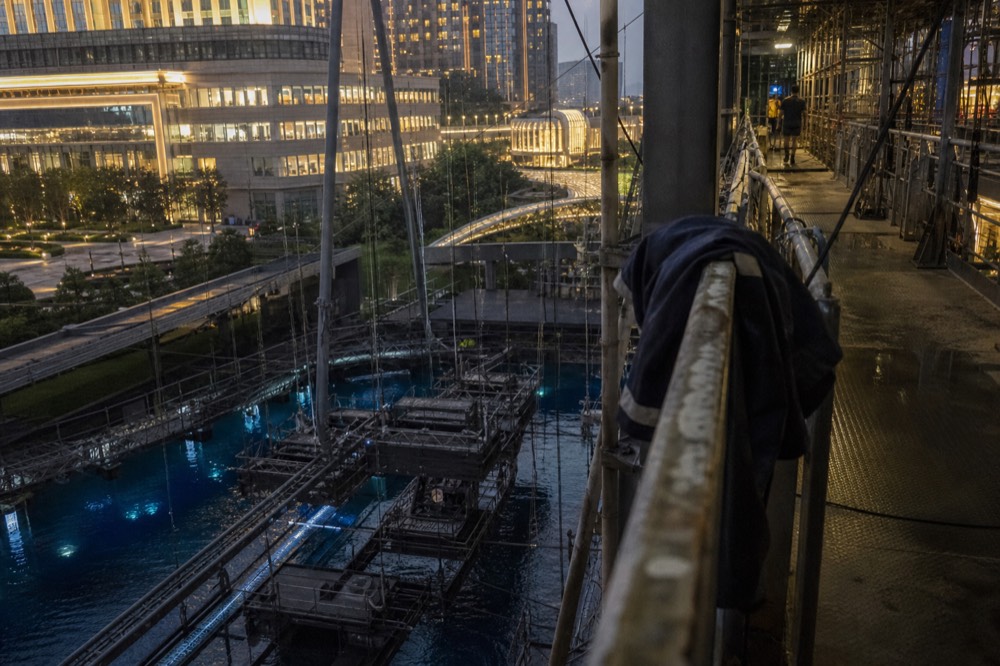
The tour is the newest product at the theatre, launched in July 2026, and it changes the evening's arithmetic. The official offer page describes a route that starts from VVIP box or Golden Circle seating, then goes down to the underground diving area, past stage props including the Golden Boat and the Dream Pagoda, out to the 17 million litre pool, and up an 18-metre-high platform above the stage. Details and booking are on the official backstage tour page.
The clothing read is straightforward. You will be standing and walking for 45 minutes through backstage areas, after already sitting through a 90-minute show, so the comfortable-shoes decision stops being optional. If you are combining a splash-row show seat with the tour, you may be doing that walk in damp clothes under cold air conditioning, which is the strongest argument anywhere in this guide for quick-dry fabrics. The minimum age of 12 also makes it an adults-and-older-kids add-on, not a family-wide one.
Worth knowing before you plan the whole evening around it: the tour departs after the evening performance only, so it pairs naturally with the 19:30 showtime rather than the matinee. That makes for a long night out, roughly curtain to past 22:00, and the layer you brought for the auditorium will still be earning its keep on the walk back through the resort.
That is the full picture: one written rule, one cold auditorium, and two rows per section where the show's name is a literal warning. Whether you dress up for the Golden Circle or dress down for a gallery splash seat, the choice of ticket does more work than the choice of outfit, and the options below cover both ends of it.
The short answers: the written rule is one sentence, dress appropriately and wear shoes. Rows A and B of every section are the splash rows, with waterproof gear left on the seats there. Personal photos are fine, flash and video are not, and outside food is banned. Children 12 and under need an accompanying adult, and the show is not recommended for ages 6 and under. The details behind each answer are below.
Common Questions About The House of Dancing Water Dress Code
Is There A Dress Code For The House of Dancing Water?
Yes, and it is one sentence: ticket holders must dress appropriately and must wear shoes. There is no jacket requirement, no collar rule and no published ban on shorts or casual wear. The audience typically ranges from resort-casual to tourist-casual, and neither end looks out of place.
Do You Get Wet At The House of Dancing Water?
Only in rows A and B of a section. The venue's official FAQ states that waterproof gear is provided on the seats in the first two rows of all sections, with towels additionally in sections 300, 400 and 500. From row C back, the hydro effects do not reach you.
Can I Wear Shorts And Sandals To The Show?
Shorts, yes, there is no rule against them. Footwear must be shoes, and the venue does not publish a definition beyond that word, so anything secured to the foot reads as compliant. Closed shoes are the practical choice, especially for the splash rows or the backstage tour.
Are Ponchos Provided At The Splash Seats?
Yes. The official FAQ says waterproof gear will be provided on the seats at the first two rows in all sections. You do not need to bring your own, though quick-dry clothing underneath makes the experience more comfortable.
Can I Bring A Camera Into The Theatre?
Personal photography without flash is allowed. Flash photography and video recording are prohibited because they affect the performers. If you are in rows A or B, keep the phone somewhere water cannot reach it.
What Should Kids Wear To The Show?
The same as adults, with extra attention to layers and to the splash rows. The auditorium runs cold, the show lasts 90 minutes with no intermission, and a wet child under cold air conditioning makes for a long evening. Children 12 and under must be accompanied by an adult, and the show is not recommended for ages 6 and under.