Is Macau A Country Or Part Of China?
Macau is a Special Administrative Region of China with its own immigration, currency and border controls. Here is what that means for your visit, your passport and your show tickets.
The question sounds academic until you are standing at a ferry counter in Hong Kong with a ticket for the evening performance of The House of Dancing Water in your inbox and a passport in your hand. Political status decides something very practical: whether you cross a border, which document you show, how long you can stay and what you can carry through. Macau's answer is unusual, and most one-line summaries get it wrong in both directions, calling it a country when it is not, or treating it as just another Chinese city when it very much is not that either.
Is Macau A Country Or Part Of China?
Macau is not an independent country; it is Chinese territory, officially the Macao Special Administrative Region of the People's Republic of China, a status it shares with Hong Kong. Under this arrangement, Macau keeps its own immigration control, customs line, currency, and legal system, so you will be stamped or recorded into and out of it as a distinct entry even when arriving from Hong Kong or mainland China.
The Macao Special Administrative Region is what the region's own government calls itself on every official page a visitor will ever interact with, from the immigration service to the tourism office. The government's immigration portal, which publishes the visa rules we use throughout this article, is a Macao SAR government service, not a Chinese national one. That is the visible edge of the arrangement: policy areas like entry, stay and currency are administered locally, by Macau's own authorities, under the constitutional framework that ties the region to China.
For a traveller, three consequences follow. First, there is a real international-style border. Arriving from Hong Kong by ferry means a departure immigration check on one side and a Macau arrival check on the other, with your passport or travel document read both times. Second, your permission to be in Hong Kong is not permission to be in Macau; the two regions admit visitors under entirely separate rules, and a stay counted in one does not count in the other. Third, money changes character at the border: Hong Kong dollars circulate widely inside Macau, but the local currency is the Macanese pataca, issued and managed by Macau's own monetary authority.
None of this makes Macau a country. It has no separate citizenship, no seat of its own in the United Nations, and no independent foreign policy. What it has is a high degree of administrative autonomy inside China, which is precisely why the border experience feels international while the political reality is that you never left Chinese sovereign territory.
If you are reading this while planning an evening around a show, the status question resolves into a checklist rather than a debate. The performance you are booking sits inside the Dancing Water Theatre at City of Dreams, a resort in the Cotai district of the Macao Special Administrative Region, and every rule about getting to it, from ferry terminals to currency to customs allowances, is a Macau rule, set by Macau institutions.
Do I Need A Passport To Cross From Hong Kong To Macau?
Yes. Hong Kong and Macau maintain separate immigration systems, so moving between them is a border crossing in the documentary sense even though both are Chinese territories. You need a valid travel document for both sides: a passport for most foreign visitors, a Hong Kong Permanent Identity Card or Re-entry Permit for Hong Kong permanent residents, and a Two-way Permit for mainland Chinese visitors. There is no open border and no domestic-style free movement.
The details of who shows what, and which queues apply, are covered in our dedicated guide to the Hong Kong to Macau immigration question, but the headline is worth fixing here because it follows directly from Macau's status. Two special administrative regions, two entry systems, two sets of entry records. A foreign visitor does the same paperwork for a day trip from Hong Kong to Macau that they would do for a day trip between two countries, minus the visa in most cases.
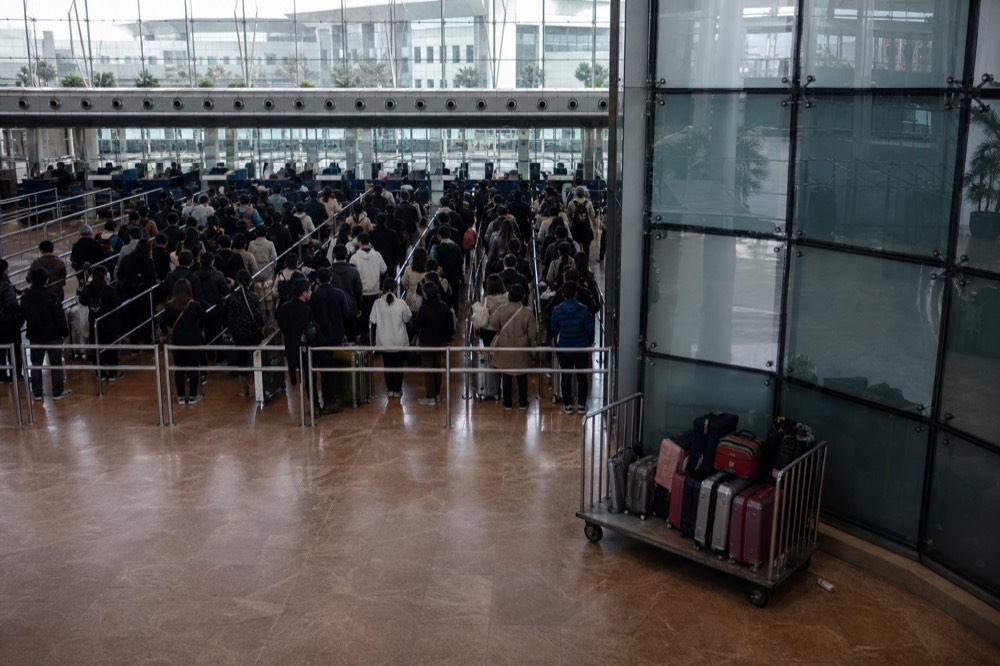
The practical wrinkle is that the crossing is easy and the paperwork is light, which misleads people into thinking there is no border at all. There is. The Macao Public Security Police Force operates the arrival control, and the published visa-free stay lengths, which we set out in the next section, are enforced at that control. Overstay rules are a Macau matter, handled by Macau authorities, not by Hong Kong's or by mainland China's.
One more status quirk worth knowing before you plan a same-day return: your exit from Hong Kong and your entry to Macau are recorded independently. Travellers stitching together a Hong Kong stay, a Macau evening and a return sailing should keep both sets of stamps or records straight, because each region counts its own admission separately. Our verdict on whether Macau is worth a day trip walks through the timing, including why a late show ending around 21:40 can collide with the last sailings, a problem one ferry-bound reviewer described after an evening performance.
Which Passports Get Into Macau Visa-Free, And For How Long?
Macau's visa-free stays vary sharply by nationality: British passport holders get up to six months, EU and Schengen citizens get up to 90 days, and most other common passports, including those from the United States, Canada, Australia, Singapore, Malaysia, Japan, South Korea, the Philippines and Indonesia, get up to 30 days. Brunei and Kazakhstan passports receive 14 days. These are Macau's own rules, published by the Macao SAR government's immigration service.
The source for all of this is the Macao SAR Government Portal's immigration service page, which lists the maximum stay per nationality. It is the same authority that staffs the arrival counters, so it is the page to trust over any aggregator summary.
| Passport | Maximum visa-free stay in Macau |
|---|---|
| United Kingdom | Up to 6 months |
| EU and Schengen states | Up to 90 days |
| United States, Canada, Australia, Singapore, Malaysia, Japan, South Korea, Philippines, Indonesia and most other listed nationalities | Up to 30 days |
| Brunei, Kazakhstan | Up to 14 days |
| Hong Kong permanent residents (with Permanent Identity Card or Re-entry Permit) | Up to 1 year |
| Mainland Chinese visitors (Two-way Permit) | Duration endorsed on the permit; special authorisation beyond 90 days |
Two rows in that table carry real information gain. The United Kingdom's six months and the EU's 90 days are far longer than the blanket "30 days for everyone" line that circulates in most travel content, and Hong Kong permanent residents get up to a year, which is why the Hong Kong to Macau flow is so casual for locals. Taiwan residents enter on a valid permit for the duration endorsed on it.
For a show visitor, none of the stay lengths are likely to bind; you would have to try hard to overstay a six-month allowance on a two-night trip. What the table really tells you is that Macau's entry regime is genuinely its own. The allowances do not match mainland China's, do not match Hong Kong's, and are administered by Macau's own service. That is the special administrative region arrangement doing exactly what it says on the tin.
Does Macau Have Its Own Currency And Border Rules?
Yes to both, and both surprise visitors. Macau issues its own currency, the Macanese pataca, which the Monetary Authority of Macao pegs to the Hong Kong dollar at a fixed HKD 1 to MOP 1.03, and it runs its own customs line with its own allowances, including a strict 19-cigarette tobacco limit and a total ban on importing electronic cigarettes. Neither the currency arrangement nor the customs rules are mainland Chinese rules; they are Macau's.
Start with the money, because every visitor touches it. The pataca's peg to the Hong Kong dollar is a currency board arrangement with 100 percent foreign exchange reserve backing and guaranteed convertibility into Hong Kong dollars, per the Monetary Authority of Macao. Because the Hong Kong dollar is itself linked to the US dollar, the pataca sits indirectly around USD 1 to MOP 8. In daily practice, Hong Kong dollars circulate widely in Macau, commonly at or near par, and your change usually comes back in patacas. Accepting Hong Kong dollars at par means you quietly absorb the roughly 3 percent difference between the two currencies, so it is a convenience cost rather than a rip-off. Patacas, meanwhile, are generally not accepted back in Hong Kong, so spend them before you leave.
Customs is where the separate-border reality bites hardest. Macau's allowance for arriving visitors is 19 cigarettes, or one cigar under 3 grams, or 25 grams of tobacco leaf, per person per day, without declaration, under the administrative orders the Macao Customs Service publishes. Excess must go through the red channel and may attract duty or penalty. Nineteen cigarettes is unusually strict, and it catches people crossing from Hong Kong or Zhuhai who assumed a carton was fine. The electronic cigarette ban is total: e-cigarettes may not be imported at all.
Then there is the weather clause that only matters because Macau is an island of separate transport rules. When the government hoists Tropical Cyclone Signal 8, ferries, the Hong Kong Zhuhai Macau Bridge shuttle buses and other transport services are suspended, and the government portal states that public transport, free resort shuttle buses and tourist facilities shut down too. A typhoon can therefore strand you on the wrong side of the water for a performance. If a storm signal is rising on a show day, check the operator's announcements about whether the performance proceeds, and check your own crossing options before you commit.
| Macau rule | What it says | Who sets it |
|---|---|---|
| Currency | Pataca pegged at HKD 1 to MOP 1.03, around USD 1 to MOP 8 indirectly | Monetary Authority of Macao |
| Tobacco allowance | 19 cigarettes, or 1 cigar under 3 g, or 25 g of leaf, per person per day | Macao Customs Service |
| E-cigarettes | Import banned entirely | Macau tobacco control law |
| Tourism tax | 5 percent on hotel and hotel-adjacent services | Financial Services Bureau |
| Typhoon response | At Signal 8, ferries and bridge buses suspend | Macao SAR Government |
Which Border Crossings Are Open, And When?
Macau can be entered at several ports, and the operating hours differ in ways that shape a show trip. The Hengqin Border and the Macau side of the Hong Kong Zhuhai Macau Bridge port run 24 hours, Gongbei Port runs 06:00 to 01:00, Shekou Port 07:00 to 22:00, and the airport is a 24-hour entry point. The published hours come from City of Dreams' own getting-here page, so treat it as the operator's statement.
The 24-hour crossings matter most for late evenings. The Golden Bus shuttle across the bridge publishes a one-way fare of HK$65 daytime and HK$70 overnight, runs around the clock with departures every 5 to 10 minutes at daytime peak and every 30 minutes overnight, and offers concession fares of HK$33 day and HK$35 night for children under 12 or under 1.2 metres, passengers with disabilities and seniors aged 65 and over. Children under 3 years or under 95 centimetres travel free. The operator publishes no crossing duration, so no figure is given here.
From Hong Kong, the ferry picture is narrower than older guides claim. Only the Hong Kong Macau Ferry Terminal at Sheung Wan has scheduled Macau sailings; the China Ferry Terminal in Tsim Sha Tsui has ticketing facilities but no sailing schedule. TurboJET publishes an economy fare of HK$194 for a weekday day sailing, HK$212 for weekend and public holiday day sailings and HK$242 at night, with the operator stating a sailing time of approximately 60 minutes. Cotai Water Jet lands at the Taipa terminal, the one on the Cotai side closest to the resorts, with weekday Cotai Class fares from HK$192. Our cheapest way to get to Macau guide compares the full cost stack, and the ferry crossing itself is covered in detail in our piece on how long the ferry takes.
| Entry point to Macau | Published operating hours |
|---|---|
| Hengqin Border | 24 hours |
| HZMB Macau Port (from Hong Kong) | 24 hours |
| HZMB Macau Port (from Zhuhai) | 08:00 to 22:00 |
| Gongbei Port | 06:00 to 01:00 |
| Shekou Port | 07:00 to 22:00 |
| Macau International Airport | 24 hours |
Once you are inside Macau, the transport that matters is local and cheap. City of Dreams, the resort that hosts The House of Dancing Water, runs free shuttle services from the ferry terminals, the airport, the HZMB port and the border, though it publishes its route schedules as images rather than text, so check the operator's own getting-here page rather than any republished frequency figure. The Macau LRT's Taipa Line serves the Cotai resorts, the airport and the Taipa Ferry Terminal, with single fares of MOP 6 in cash for up to three stations and MOP 12 for up to twelve, and card fares of MOP 3 and MOP 6 respectively. Three lines are operating: the Taipa Line, extended to Barra, plus the Seac Pai Van and Hengqin lines, with an East Line under construction toward a 2029 target.
Why The Status Question Matters For Your Show Night
Because every element of a House of Dancing Water evening is governed by Macau rules, not Chinese national ones and not Hong Kong's. Your entry is a Macau entry, your patacas and accepted Hong Kong dollars follow Macau's currency practice, your customs allowance is Macau's 19-cigarette limit, and the show's own terms are set by Macao-registered operating entities. Getting the status wrong rarely costs money; it costs you time at a counter, or worse, a missed curtain.
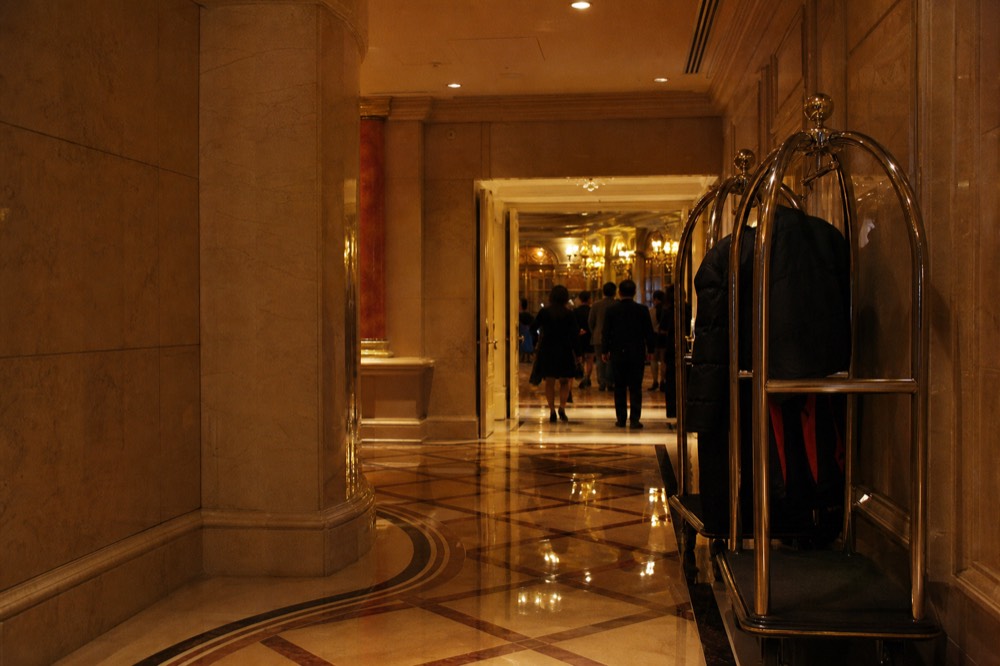
The show itself is a good illustration of how local everything is. The Dancing Water Theatre sits at Level 1 of City of Dreams, at the northeast entrance opposite the Jin Ying restaurant, and the ticketing terms name Macao operating entities as the sellers. The performance runs about 90 minutes with no intermission, normally plays twice a day, Wednesday to Sunday, and is dark on Mondays and Tuesdays, with the operator noting that show times and closure days may be adjusted around public holidays.
Timing is where the status question and the show question collide. The theatre asks customers to arrive at least 15 minutes before the performance starts, and to collect a physical ticket at least an hour before. Current listings show start times of 16:30 and 19:30 for the mid-2026 season, but times have varied across the year and the official page does not publish a permanent table, so confirm your date against the live listing before you lock in a ferry sailing. A 19:30 performance ending around 21:00, or a later slot ending near 21:40, leaves a narrow window for the last cross-border transport, and one reviewer described exactly that squeeze trying to reach the Taipa ferry terminal after an evening show.
There is also a scheduling trap specific to this production: a dark period from 7 to 22 September 2026 is listed, consistent with the operator's own ticketing calendar showing performance blocks either side of those dates. It is strong enough to warn you to check dates, not strong enough to treat as a fixed annual maintenance window. The show's schedule quirks, including the seasonal start times, are laid out in our House of Dancing Water show times guide.
Planning around all of this is easier when you treat Macau as what it is: a small, separately administered territory that you enter on its own terms and leave on its own schedule. The visitors who have the smoothest nights at the Dancing Water Theatre are the ones who checked the crossing hours, kept some Hong Kong dollars for the par-rate shops and some patacas for everything else, left the e-cigarette at home, and booked a ticket category in advance rather than gambling on the box office.
For everything the region offers beyond the theatre, from the free lobby spectacles to the Cotai resort district itself, our things to do in Macau at night guide picks up where the curtain falls. And if you are still assembling the whole crossing, currency and itinerary picture in one place, House of Dancing Water Tickets exists precisely to keep the show-adjacent logistics honest.
These are the questions travellers ask most often about Macau's political status, and each answer below is short, factual and sourced from the Macao SAR government's own published rules on entry, currency and customs. If your question is not here, the immigration service page linked above is the authority that staffs the arrival counters and publishes the definitive nationality-by-nationality stay limits.
Common Questions About Macau's Status
Is Macau A Country Or Part Of China?
Macau is part of China. It is the Macao Special Administrative Region of the People's Republic of China, a status it shares with Hong Kong, and it administers its own immigration, customs and currency. It is not an independent country and does not claim to be one.
Do I Need A Passport To Travel From Hong Kong To Macau?
Yes. Hong Kong and Macau run separate immigration systems, so the crossing is a border in the documentary sense. Foreign visitors need a passport for both sides; Hong Kong permanent residents use their Permanent Identity Card or Re-entry Permit, and mainland Chinese visitors use a Two-way Permit.
Is Macau Visa-Free?
For most major nationalities, yes, for a limited stay. British citizens get up to six months, EU and Schengen passport holders up to 90 days, and United States, Canadian, Australian and most other listed passport holders up to 30 days, per the Macao SAR government's immigration service.
Can I Use Hong Kong Dollars In Macau?
Widely, yes, commonly at or near par, with change usually given in Macanese patacas. Accepting Hong Kong dollars at par means absorbing the roughly 3 percent difference between the currencies. The pataca itself is pegged at HKD 1 to MOP 1.03 and is generally not accepted in Hong Kong.
Is The Border Between Hong Kong And Macau Open 24 Hours?
The ferry terminals are not; sailings run to a schedule. The 24-hour crossings are the Hengqin Border and the Hong Kong Zhuhai Macau Bridge port from the Hong Kong side, where the Golden Bus shuttle runs around the clock at HK$65 daytime and HK$70 overnight.
Does Chinese Customs Law Apply In Macau?
Macau runs its own customs line with its own allowances. The tobacco allowance is 19 cigarettes per person per day, and electronic cigarettes are banned from import entirely. Excess tobacco must be declared at the red channel.